
Transmission Fluid Leaks in Marietta, GA: Causes, Colors, and What to Do
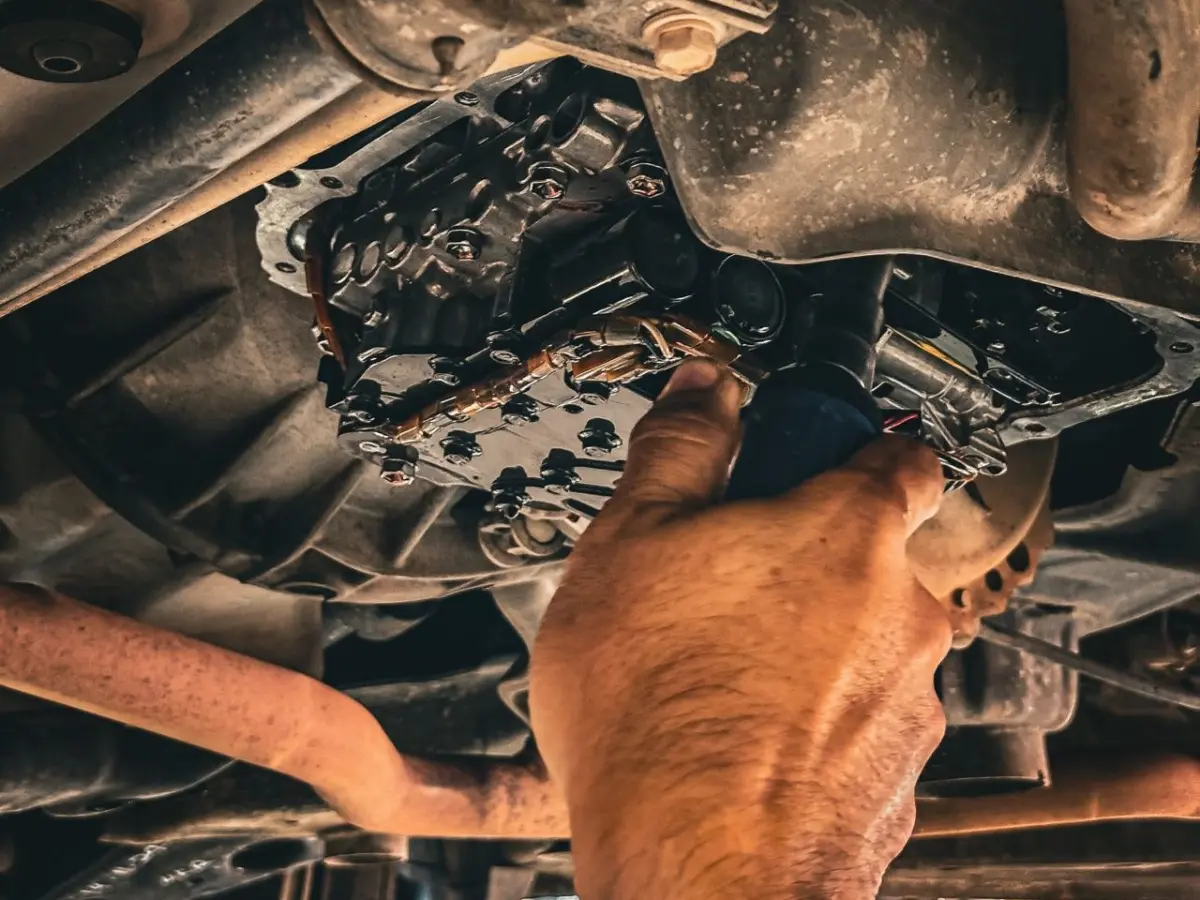
Short answer: Red or pink fluid on the pavement toward the front or middle of your vehicle is usually transmission fluid. A transmission that runs low gets hot fast, and heat is what wears out clutches and bands. A leak that needs a gasket or a seal today can turn into a rebuild if you keep driving on it, so check the level, note the color, and get it looked at before your next long drive.
Guardian Transmission Repair is a transmission shop in Marietta, GA. This page covers one problem: fluid that is leaking out of a transmission or the drivetrain parts around it.
What could a transmission fluid leak mean?
A transmission fluid leak may mean fluid is escaping from a seal, gasket, line, or housing that is supposed to hold it, but an inspection is needed to confirm the source and cause. The fluid cools, lubricates, and carries hydraulic pressure that engages gears in an automatic. When the level drops, pressure drops with it, and the symptoms start: slipping, delayed engagement, harsh shifts, shuddering, and overheating.
Some leaks are slow weeps that leave a damp film on the pan. Others drip enough to leave a puddle overnight. Both matter. Even a slow weep can lower the level a little at a time until the first sign of trouble is a transmission that slips on a hill.
If you want the full list of what low fluid feels like from the driver’s seat, read 10 Symptoms of Low Transmission Fluid (and How to Check Yours).
How do I tell which fluid is leaking?
Color, feel, smell, and location together usually narrow it down. Puddles can be misleading because fluids drift as the vehicle drives, and some systems use similar fluids. Some power steering systems, for example, are filled with a fluid that looks a lot like transmission fluid.
Slide a clean piece of cardboard under the vehicle overnight. The spot where the drips land tells a technician a lot before anyone lifts the hood.
What color should transmission fluid be, and what does dark or brown fluid mean?
Fresh automatic transmission fluid is often red or pink and see-through. Brown or dark fluid means it has aged or been heated, and carries wear material. Black fluid, or fluid with a gritty feel, points to heavy wear or overheating and deserves a closer look.
Check it on a white paper towel. Look for three things: color, clarity, and particles. Milky or pink-tan fluid can mean coolant is getting in through a failed cooler, which is a separate and serious problem. Foamy fluid can mean the level is overfilled or too low.
Fluid type matters too. Automatic transmissions, CVTs, and manual transmissions each use different fluids. Topping off with the wrong one can cause shifting problems. Transmission Fluid, Explained: Types, What It Actually Does, and When to Change It covers which is which.
What does burnt-smelling transmission fluid mean?
A burnt smell means the fluid has overheated, or friction material from clutch packs or bands has worn into it. Common causes are low fluid, towing, a restricted cooler, or a slipping transmission. Changing the fluid will not undo worn clutches, so the cause needs to be found.
One exception is worth knowing. A leak that drips onto a hot exhaust or engine part can smell like something burning even when the fluid in the transmission is fine. A technician can tell the difference by checking the fluid itself and looking for where the drips land.
A burnt smell plus slipping, delayed engagement, or a shudder is a warning. How Do You Know If Your Transmission Is Going Out? 8 Signs, Ranked by Urgency will help you judge how urgent it is.
Where do transmission fluid leaks come from?
Most leaks trace back to a short list of parts. Some cost little to fix. Others sit behind the transmission, so the repair is bigger than the part.
Pan gasket and drain plug
The pan holds the fluid and the filter sits inside it. Gaskets harden with age and heat. Bolts can loosen or the pan can be dented by road debris. This is a common leak, and since the pan is already coming down, the filter can be serviced at the same time. A clogged transmission filter is worth checking while the pan is off.
Axle and output shaft seals
In front-wheel drive vehicles, the axles enter the side of the transmission through seals. In rear-wheel drive vehicles, the driveshaft slides into a seal at the tail. When they harden or the bushing wears, fluid seeps past them. A leak near a wheel or along the driveshaft is often this.
Front pump seal
This seal sits between the transmission and the torque converter. When it fails, fluid shows up at the bell housing, the joint between the engine and transmission. Replacing it generally means removing the transmission, which is why the labor is heavier than the part.
Cooler lines and the cooler
Steel lines carry hot fluid to a cooler and back. They rust, rub through, or leak at the fittings and rubber sections. A leak here can dump fluid quickly. Stress from towing raises heat, so cooler problems often show up in trucks and SUVs that pull loads.
Filler tube, sensors, and shift shaft seals
O-rings and seals on the filler tube, speed sensors, and the shift shaft are small parts that weep with age. They are cheap, though finding them in a dirty, oily case can take time.
Case, torque converter, and manual transmission seals
Cracked or porous cases and a leaking torque converter are less common. Manual transmissions leak gear oil at the input shaft seal, shift linkage seals, or the tail housing. A leaking clutch slave or master cylinder loses hydraulic fluid, and the pedal gets soft or sticks to the floor. Transfer cases and differentials on 4WD and AWD vehicles have their own seals and gear oil, and they leak too.
Is it safe to drive with a transmission leak?
Short, careful drives to a shop are usually fine if you have checked the level and it is in range. Driving on a low level is what causes damage. If the vehicle slips, will not move, or is dripping steadily, stop and arrange a tow instead of finding out how far it will go.
A few rules while you wait for an appointment:
- If your vehicle has a transmission dipstick, check the fluid level before driving. Some vehicles do not have one, and the level may need to be checked by a technician.
- Do not tow or haul heavy loads.
- Do not pour in stop-leak additives hoping to seal the problem. Wrong fluid or additives can cause shifting trouble, and a worn seal needs replacing.
Some of the worst damage starts with small mistakes. 7 Mistakes That Kill Transmissions lists the ones to avoid.
What does diagnosing and fixing a leak involve?
Finding a leak means cleaning the area, confirming the fluid type, and tracing the drip to its source. Diagnosis may include a fluid check, a lift inspection, a computer scan for trouble codes, and sometimes dye or a clean-and-watch approach. The repair depends on what is leaking and how deep it sits.
Here is how that typically runs:
- Fluid check. Level, color, smell, and condition tell a technician whether the leak has already caused damage.
- Lift inspection. The vehicle goes up so the pan, seals, lines, and cooler can be seen from below. Oil gets everywhere, so the highest wet spot is usually the source.
- Cleaning and re-check. Degreasing the area and running the vehicle can show where fresh fluid appears. Dye can help with slow leaks.
- Scan and test. If there are shifting symptoms, a scan for stored codes and a road test can show whether the leak has already affected how the transmission works.
- Repair. This might be a gasket and filter service, a seal, a line, or a cooler. If a leak is at the front pump seal, the transmission has to come out.
- Refill and verify. Correct fluid, correct level, and a follow-up check that the leak is gone.
Sometimes a leak is the first sign of a larger problem. If the fluid is burnt or full of debris, or the transmission has been run low, the repair may go beyond a seal. In that case the options include repair or a rebuild. Guardian offers automatic transmission repair in Marietta and East Cobb and custom transmission rebuilds in Marietta. A rebuild is not where most leak repairs end up, but it is where a leak ends up if it is ignored long enough.
How much does it cost to fix a transmission leak or change the fluid?
A leak repair can cost little or quite a lot, depending on the part and how much has to come apart. A gasket or a line is usually a smaller job. A front pump seal needs transmission removal, so labor rises. A fluid change costs less than a repair, and the price varies by vehicle.
The factors that move the price:
- Make, model, and year, including imports and domestics
- Transmission type: automatic, CVT, or manual
- Which part is leaking and how hard it is to reach
- Parts availability
- Whether the leak has already caused internal damage
- Labor hours at the shop’s hourly rate
Ask any shop whether the diagnostic fee is credited toward the repair, and get the quote in writing before work begins. A phone price for a fluid service should say what fluid, how much, and whether a filter is included. Guardian’s transmission fluid service in Marietta and East Cobb page explains what that service involves.
How often should transmission, CVT, and differential fluid be changed?
The right interval comes from your owner’s manual, and it varies a lot by vehicle. Hard use, such as towing, stop-and-go traffic, and heat, shortens it. Automatics, CVTs, and differentials each have their own schedules, and some manuals label a fill as lifetime.
- Automatic transmission fluid. Follow the manual. If the fluid is dark, smells burnt, or you tow, have it checked sooner.
- CVT fluid. CVTs use a fluid made for them, and the belt or chain and pulleys depend on it. Heat is hard on a CVT, so the manufacturer’s interval matters, and the wrong fluid is a common cause of trouble. If you have a CVT, see CVT transmission repair in Marietta and East Cobb.
- Differential fluid and gear oil. Rear and front differentials, and transfer cases on 4WD and AWD vehicles, use gear oil that is changed on a separate schedule. Limited-slip differentials may need a specific additive.
- Manual transmission gear oil. Also has its own interval. See manual transmission repair in Marietta and East Cobb.
A fluid change does not stop a leak. If the level keeps dropping after a service, something is still leaking.
What about work trucks and fleet vehicles?
If you run vans, box trucks, or work pickups, a leak costs you in downtime as much as in repairs. Fleets that tow or idle in traffic run hot, and heat ages seals. Check levels as part of routine inspections, record the date a leak is first noticed, and pull a vehicle that is slipping instead of finishing the route. Residential drivers can do the same with a weekly look at the driveway.
Which related services come up with a leak?
A leak can lead to a few other jobs. Fluid that has overheated may call for a filter and pan service. A leak with slipping or harsh shifts may point to internal wear, which is covered in 5 Common Automatic Transmission Problems and When to Get Help. Guardian’s services overview lists the work they handle from the engine back to the wheels.
The service area includes Marietta, East Cobb, Kennesaw, Acworth, Woodstock, Roswell, Sandy Springs, and Sandy Plains.
Leaking fluid FAQs
Can I just keep adding fluid instead of fixing the leak?
Topping off can buy a short time if the leak is small, but it does not fix the leak. The level keeps falling, and you risk running low between checks. Use the correct fluid type for your vehicle.
Will a stop-leak additive fix a transmission leak?
Additives can swell old seals for a while, and they do not repair a cracked gasket, a damaged line, or a worn shaft. The wrong additive can affect shifting. A diagnosis finds the source and the proper fix.
Does a transmission leak mean I need a new transmission?
No. Many leaks are seals, gaskets, lines, or a cooler. A rebuild comes into play if the transmission was run low or hot and the internal parts have worn. A diagnosis shows which one you have.
How long can I drive with a leaking transmission?
There is no safe number. It depends on the leak rate and the level. If the fluid is in range and the vehicle shifts normally, a short drive to a shop is usually reasonable. If it slips, smells burnt, or drips steadily, arrange a tow.
Is red fluid always transmission fluid?
No. Power steering fluid in some vehicles is also red, and so is some coolant. Location and smell help. A technician can confirm it from a sample and an inspection.
What does burnt transmission fluid smell like?
Like burnt toast or scorched oil. It means heat or friction material in the fluid, and it needs diagnosis before a fluid change.
If you are seeing spots, smelling something burnt, or noticing slipping, call Guardian Transmission Repair in Marietta, GA and describe what you are seeing.
Still worried about your transmission?
We drive it, scan it, and put it on the lift for free. No salespeople, ever.