
Transmission Fluid, Explained: Types, What It Actually Does, and When to Change It
Short answer: transmission fluid is hydraulic fluid, coolant, and lubricant in one — in an automatic, it’s literally what shifts the gears. Use exactly the type your manual specifies, and change it every 30,000–60,000 miles (automatic) or 30,000–60,000 for manuals. “Lifetime fluid” is a marketing term, not an engineering one.
Three jobs in one fluid
Hydraulic muscle
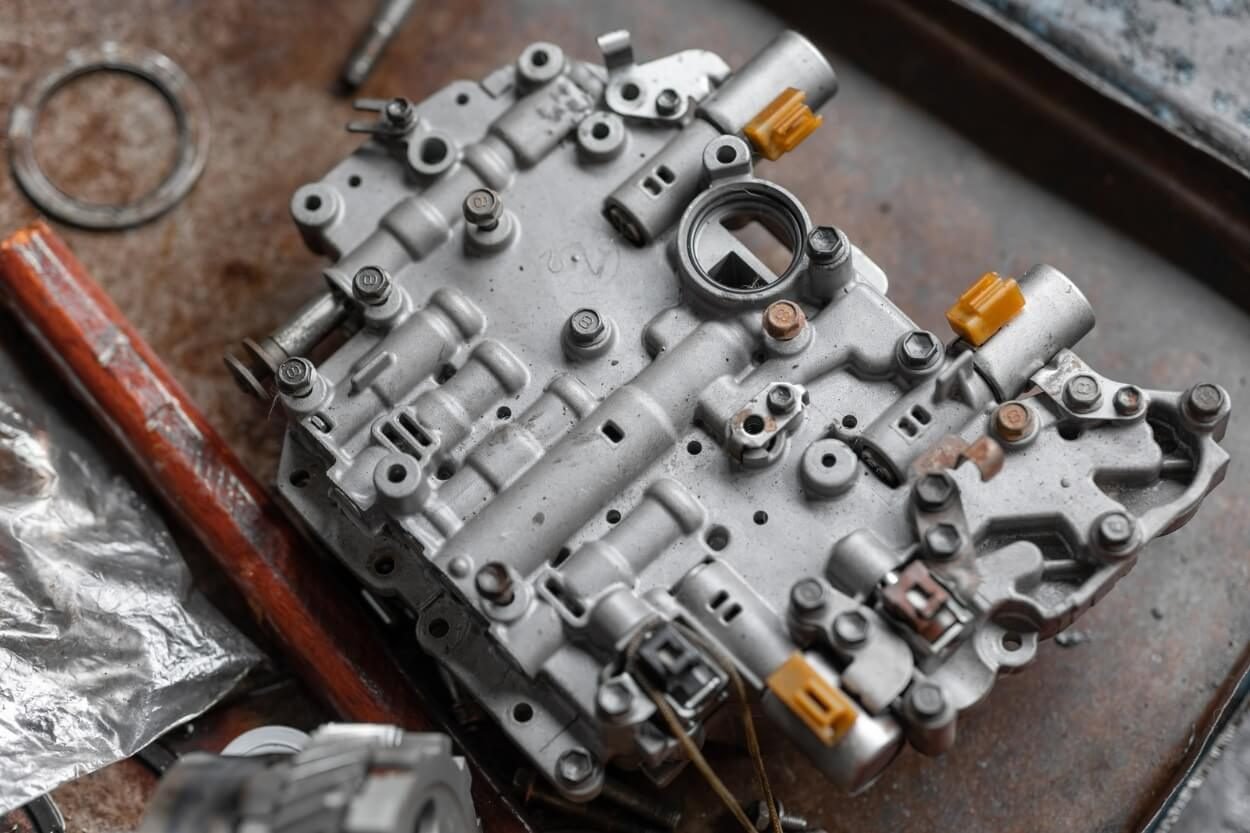
Automatic shifts happen because fluid pressure clamps clutches and bands. Low or degraded fluid literally can’t shift gears — that’s why so many “failing” transmissions are really fluid problems.
Cooling
A working transmission generates serious heat. Fluid carries it to the cooler. Every 20°F above normal operating temperature roughly halves fluid life — Georgia summers and towing both count.
Lubrication
Gears, bearings, bushings, and the planetary sets all ride on fluid film. Contaminated fluid grinds them down with the debris it’s carrying.
The types — and why the right one matters
The single most expensive fluid mistake we see: a well-meaning top-off with whatever was on the shelf. Wrong friction modifiers change how clutches grab — the transmission starts shuddering within weeks. If you don’t know the spec, check the manual or call us at (770) 509-2140 with your VIN.
When to change it
Every 30,000–60,000 miles for most automatics under normal use — and “normal” excludes towing, rideshare duty, and stop-and-go commuting, which all fall under “severe service” (30k). CVTs generally want 30k–40k. If the fluid is brown or smells burnt at any mileage, it’s due. Our fluid service includes the pan drop and filter — the part quick-lube exchanges skip — and our maintenance guide covers the full schedule.
Frequently asked questions
Is a flush better than a drain-and-fill?
Depends on the transmission’s condition. On a high-mileage unit that’s never been serviced, a forced flush can dislodge debris into places it shouldn’t go — we usually recommend a pan-drop service first. We’ll tell you which your car needs, not which costs more.
My car says the fluid is “lifetime” — really?
Manufacturer “lifetime” typically means the warranty period. Transmissions that get 60k services routinely outlast “sealed” ones by 100,000 miles. It’s the cheapest insurance in the drivetrain.
Can a fluid change hurt a high-mileage transmission?
The myth comes from transmissions that were already failing — fresh fluid revealed the wear, it didn’t cause it. If yours is shifting fine, service it. If it’s already slipping, get the diagnostic first.
Not sure when yours was last done?
We'll check the fluid's condition for free and tell you honestly if it can wait.