
Water Pumps in Marietta: What a Failing Pump Does to Your Transmission
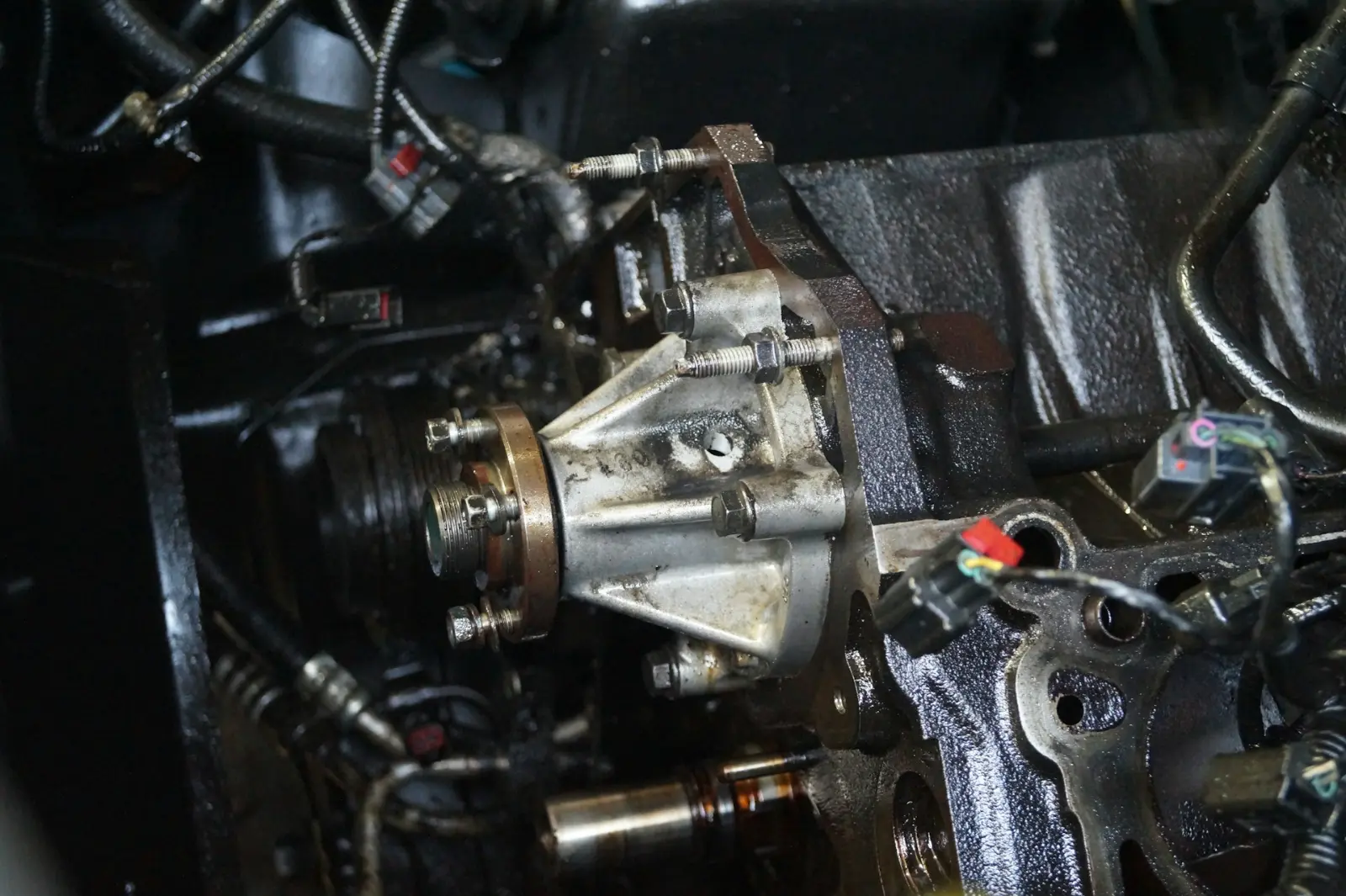
Short answer: A failing water pump is an engine cooling problem, but it can destroy a transmission if you keep driving on it. If your temperature gauge is climbing, coolant is leaking, or steam is coming off the hood, stop and shut the engine off. After any overheating event, have the transmission fluid checked for heat damage and coolant contamination before the vehicle goes back to work. This page covers the transmission side of water pump failure for drivers and fleets around Marietta.
What does a water pump do, and why does a transmission shop care?
The water pump circulates coolant through the engine, radiator, and heater core. Depending on the engine, it runs off the serpentine belt, the timing belt, the timing chain, or an electric motor. When it stops moving coolant, engine temperature climbs fast.
A transmission shop cares because on many vehicles the automatic transmission shares that cooling system. A common layout puts a small transmission cooler inside the radiator, so hot transmission fluid passes through a section of the radiator to shed heat. Other vehicles use an external cooler, a coolant-to-fluid heat exchanger, or both. In every one of those layouts, a cooling system that quits makes the transmission run hotter.
Transmission fluid is built to work within a temperature window. Past it, the fluid breaks down, seals harden, and clutch material wears quickly. Heat is one of the main reasons automatic transmissions fail early.
What are the signs of a failing water pump?
The usual signs are a rising temperature gauge, a coolant leak near the front of the engine, a whining or grinding noise from the pump bearing, steam from under the hood, and a heater that blows cold. Any of these can show up before a full failure.
A check engine light can also appear after overheating. Stored OBD-II codes may point at the engine, the transmission, or both. The P07xx series covers transmission faults, and a scan tool is how you tell which system set the light.
How does a bad water pump damage an automatic transmission?
It does so in two ways: heat and contamination. Heat is the common one. Coolant getting into the fluid is less common and more severe.
Heat breaks down the fluid first
Overheated automatic transmission fluid loses its ability to lubricate and carry heat away. Clutch packs and bands start to glaze or burn. Seals and gaskets harden and leak. Solenoids and the valve body can pick up varnish and debris. You may feel it as slipping, delayed engagement, harsh shifting, or shudder. Fluid that smells burnt or looks dark brown or black is a sign it has been cooked.
Coolant in the fluid is worse
If the cooler inside the radiator develops an internal leak, coolant and transmission fluid can mix. The fluid often turns pink, milky, or foamy. Coolant attacks clutch friction material and can leave the transmission slipping within a short time. A mixed system also sends contaminated fluid back through the lines to the unit. This is a separate failure from the pump itself, though an overheating event and a cooler failure can show up together.
See our guide to how to tell if your transmission is going out for the symptoms ranked by urgency.
How can you tell if coolant has gotten into transmission fluid?
Check the fluid color and texture. Healthy fluid is clear and usually red or another dye color. Fluid that looks like a strawberry milkshake, appears foamy, or has a thin, watery film points to coolant or other water intrusion. Check the level too, since a level that is rising instead of dropping can mean something is adding liquid.
Other clues:
- Coolant level dropping with no visible leak outside
- Oily film or residue in the coolant reservoir
- Slipping or shuddering that started right after an overheating event
- A transmission temperature light that comes on in normal driving
Checking fluid correctly depends on the vehicle. Some transmissions are checked warm with the engine running, and many newer ones have no dipstick at all. Our page on transmission fluid service in Marietta and East Cobb explains what fluid type your vehicle calls for, including Dexron, Mercon, and CVT fluid. Our article on the symptoms of low transmission fluid covers how to check yours.
Can you still drive with a failing water pump?
No. Once the temperature gauge rises or you see steam, stop driving. Every extra mile risks a warped cylinder head or a blown head gasket in the engine, and cooked fluid and burned clutches in the transmission. A short drive can turn a pump job into an engine and transmission bill.
What to do if it happens on the road:
- Pull over safely and shut the engine off.
- Do not open the radiator cap on a hot system.
- Let the vehicle cool, then check for visible leaks or a loose belt.
- Have it towed if coolant is low, the pump is leaking, or the gauge climbs again after a restart.
- After the cooling repair, ask for the transmission fluid to be inspected before normal driving resumes.
The same applies when the transmission temperature light comes on or the vehicle drops into limp mode. Limp mode locks the transmission into a limited gear range to reduce damage. It is a warning, and the vehicle should not be pushed to finish the day’s route.
What should happen to the transmission after an overheating event?
It should be checked before you assume it survived. Diagnosis after overheating may include a fluid inspection for color, smell, level, and contamination, a scan for stored codes, a road test, and a look at the pan for metal debris or clutch material. The findings decide whether the fix is a fluid service, a repair, or a rebuild.
What a technician looks for depends on the symptoms and the unit:
- Fluid condition: color, burnt smell, and any sign of coolant
- Stored P07xx codes, such as P0730 for gear ratio faults or P0741 for torque converter performance
- Slipping, delayed engagement, harsh shifts, or shudder during a road test
- Debris in the pan or on a magnet, which can point to clutch, band, or hard-part wear
- Cooler and cooler lines, which may need flushing or replacement if debris or coolant reached them
If the transmission cooler is shared with a leaking radiator, the cooler path matters as much as the transmission. Installing a repaired unit into a contaminated cooling circuit invites a repeat failure.
Our automatic transmission repair page covers diagnosis and repair in more detail. Drivers with a belt or chain-type automatic should also read about CVT transmission repair, because CVTs are especially sensitive to heat and to the correct fluid.
Is it worth rebuilding a transmission after overheating or coolant contamination?
It depends on how far the damage went. Mild heat exposure caught early may need only a fluid service and cooling repair. Coolant contamination or burned clutches usually mean a rebuild or replacement. A rebuild is often worth it when the case and hard parts are sound and the vehicle is worth keeping.
Cost drivers include the vehicle make and model, the labor rate, any hard-part damage, parts quality, and whether the unit is a CVT or a dual-clutch design, which tend to add complexity. Repair, rebuild, remanufactured, used, and new OEM units are different things, and the price gap between them is wide. A custom transmission rebuild replaces worn clutches, seals, and gaskets and can address the damage that heat caused.
Before you commit to a number, read about how to choose a transmission shop in Marietta. It lists what to ask about diagnosis, parts, and written estimates.
Homeowners and fleet managers face different problems
A daily commuter can usually take a vehicle out of service for a few days. A contractor with a work truck, a delivery van, or a shuttle has a route and a schedule. The failure risks are the same, but the decision changes.
For a personal vehicle, the question is repair cost versus vehicle value. For a work vehicle, downtime counts too. A truck that towed a load while running hot may have transmission damage that does not show until it is back under load. If you manage several vehicles, track temperature warnings and coolant top-offs, since repeated top-offs often point to a leak that will fail at a bad time. Many transmission failures start with ignored warning signs, and our list of mistakes that kill transmissions covers the common ones.
Does Guardian Transmission Repair replace water pumps?
Guardian Transmission Repair is a transmission shop in Marietta. Water pump replacement is an engine cooling repair, and it is not one of the services we have listed. If your pump has failed, the cooling repair needs to happen first, and you should call to ask whether we can help with your specific vehicle.
What we can help with is the transmission side: checking for overheating damage, fluid condition, and the cooler path, and then repairing or rebuilding the transmission if it was hurt. The shop serves Marietta, East Cobb, Kennesaw, Acworth, Woodstock, Roswell, Sandy Springs, and Sandy Plains. You can see everything we work on on our main services page.
Water pump questions drivers ask
How long can a car run with a bad water pump?
There is no safe number. If the pump is leaking slowly, the vehicle may run for a while until coolant gets low. If the bearing fails or the impeller stops moving coolant, overheating can happen within minutes. Stop at the first rise in the temperature gauge.
Will replacing the water pump fix a transmission problem?
Only if the transmission problem was caused by heat that has since been corrected, and even then damage may remain. A new pump fixes circulation. It does not restore burned clutches or contaminated fluid.
Can a bad water pump cause transmission slipping?
Indirectly, yes. Overheating can degrade the fluid and wear the clutches, and slipping, harsh shifts, or delayed engagement can follow. If the symptoms began after an overheating event, tell whoever inspects the transmission.
Is milky transmission fluid always a failed radiator cooler?
No. A leaking cooler is a common cause, but water can also enter through other paths, such as driving through deep water. Diagnosis is needed to find the source, and the source has to be fixed before the transmission is repaired.
Is a fluid change enough after coolant gets into the transmission?
Usually not. Coolant can damage clutch friction material, so fresh fluid will not undo that. A fluid service can still be the right call after mild heat exposure with no contamination.
Can you check my transmission after a cooling system repair?
Call us, describe the vehicle and what happened, and we can tell you what an inspection can involve. Mention any warning lights, leaks, or shifting changes.
Still worried about your transmission?
We drive it, scan it, and put it on the lift for free. No salespeople, ever.